How to Get Guests to Share Photos of Your Hotel (Without Asking Awkwardly)
Most hotel teams know guest photos are valuable. They know authentic content outperforms polished brand posts. They know future guests trust real people more than staged photography. They know the best social media content is often already being created by guests on property.
And yet when it comes to actually getting more of it, most hotels freeze.
Because asking guests to share photos can feel awkward.
No one wants to sound needy. No one wants to interrupt a guest experience with a clumsy marketing request. No one wants the front desk team saying "Hey, could you maybe post about us?" in a way that makes everyone involved slightly uncomfortable.
That instinct is correct.
The problem is not that hotels need to ask more aggressively. The problem is that most properties are asking in the wrong way, at the wrong time, with the wrong setup.
When guest photo sharing feels awkward, it is usually because the hotel is treating it like a favour. The best-performing hotels do the opposite: they make sharing feel like a natural extension of the stay itself. That is the shift this guide is about.
Why awkward asks fail
The reason generic guest-photo requests fall flat is simple: they create friction at the exact moment you are trying to generate enthusiasm.
If a guest has to stop mid-check-out, figure out what you want, find your Instagram account, decide whether they feel like doing you a favour, and wonder how their photo might be used, most of them will not bother.
Not because they disliked the stay. Because the request asked too much.
A weak UGC prompt usually sounds like one of these:
- "Tag us if you post."
- "Share your photos and mention us."
- "Don't forget to put us on Instagram."
- "Send us your pictures if you took any."
These are not offensive. They are just vague, passive, and easy to ignore. They leave too many decisions to the guest: what kind of photo, when to post, where to send it, whether you will ever see it.
According to CrowdRiff's research on travel UGC, 32 to 39 percent of millennials will not book a hotel from a brand that does not use UGC in its digital marketing, which means there is a direct revenue cost to collecting this content poorly. The irony is that most of those guests would have been happy to share, given the right setup.
What guests actually respond to
Most guests will not share content because a hotel asked them to help with marketing.
They will share because one of three things happened:
- They had a moment worth showing.
- They were given a simple prompt at the right time.
- The action felt fun, rewarding, or socially natural.
Research published in PMC found that photo-sharing behaviour during travel directly correlates with more positive evaluation of the experience itself, meaning guests who share often enjoy their stay more, not just document it more. Designing moments that encourage sharing is good for the guest experience, not just the marketing team.
Your goal is not to convince guests to post. It is to design better sharing conditions.
Think about the difference between these two experiences.
In the first, a receptionist says at check-out: "If you took any nice pictures, tag us."
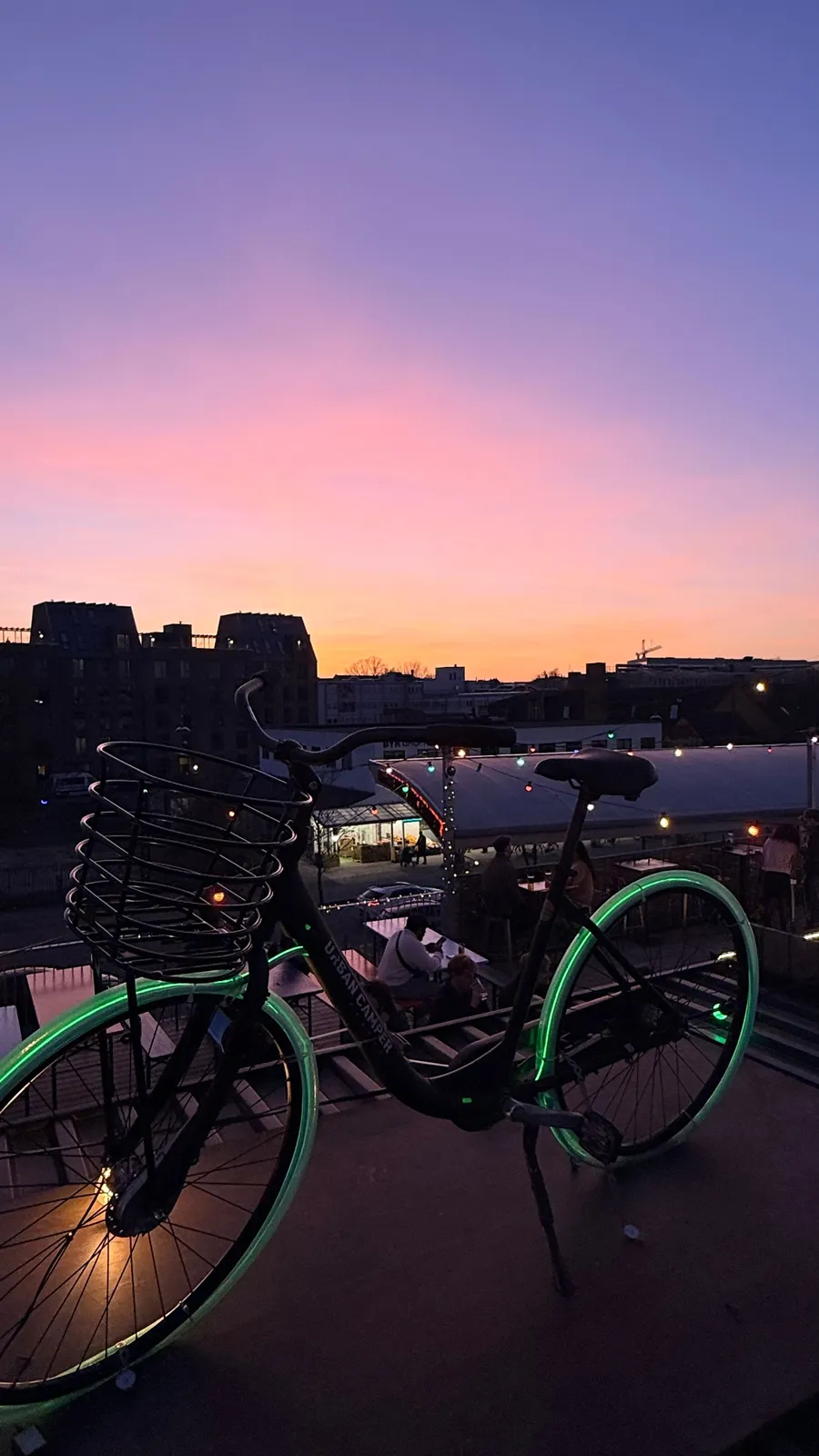
In the second, a guest walks past a rooftop bar at golden hour and sees a beautifully placed prompt card near the view: "Captured the sunset? Share your stay moment here and get a drink credit on your next visit."
One feels like a generic request. The other feels like an invitation tied to a real experience already happening. That difference is everything.
The best moments to ask
Timing is the single most underestimated variable in guest content collection.
Ask too early and the guest has not experienced enough to want to share. Ask too late and the emotion has passed and the checkout queue is not the right context.
The strongest time to prompt photo sharing is at emotionally high points in the guest journey. In practice, that often means:
- Right after check-in, during the room reveal.
- At breakfast, when the setup looks its best in morning light.
- At golden hour on a terrace, rooftop, or pool deck.
- During signature experiences such as cocktails, live music, or a spa moment.
- At check-out, when a positive stay is fresh and the guest is naturally reflective.
Each of these moments has one thing in common: the guest is already likely to reach for their phone.
That is the core principle. Do not invent content moments from scratch. Identify where guests already photograph naturally, then place your sharing prompt there.
If your best content comes from rooftop sunsets, a call-to-action at reception is not enough. If your rooms photograph beautifully in the morning, do not rely on a check-out prompt alone. If your restaurant is the most shareable space on the property, treat it as a content engine rather than just a dining outlet.
How to ask without sounding awkward
The best guest-content prompts do not feel like corporate requests. They feel clear, casual, and contextually appropriate.
A good ask usually has four parts:
- A moment (what to photograph)
- A simple action (what to do with it)
- A light reason (why it is worth doing)
- A frictionless path (exactly where to go)
For example:
- "Loved the view? Share your favourite stay photo here."
- "Captured your room, breakfast, or sunset? Upload it in 10 seconds."
- "Got a photo from your stay? Send it here for a chance to be featured."
- "Share your favourite moment and unlock a small thank-you."
These work better than vague asks because they give the guest a category, a next step, and a reason. They also avoid making the guest feel like unpaid marketing staff.
According to Hotelchamp, UGC is perceived as 2.4 times more authentic and trustworthy than branded content, but that trust only exists when the content feels genuinely voluntary. Tone matters. The ask should feel warm, not transactional; inviting, not demanding.
Guests do not want to create "assets." They want to share experiences that made them feel something. Your job is to meet them there.
What to offer in return
Not every hotel needs a reward system. Some guests will share simply because they want to, especially if the experience was exceptional.
But incentives can help, particularly when you are trying to build a more predictable and repeatable content pipeline.
The best incentives are small, relevant, and easy to understand:
- A complimentary drink or dessert
- A discount off a future stay
- Entry into a monthly late-checkout draw
- A chance to be featured on the hotel's social channels or website
- A small loyalty perk or room upgrade token
The important factor is not the size of the reward. It is the fit. A generic prize that feels unrelated to the stay often underperforms a small, hospitality-native reward that feels immediate and pleasant.
According to EnTribe data cited by CrowdRiff, 65 percent of people aged 18 to 44 say they would feel more loyal to a brand that requested and used their content in its marketing. Recognition alone, being featured or credited, can be a meaningful incentive, especially for guests who are already active on social media.
One caveat: if the incentive is too prominent, content quality drops. You start receiving submissions made to claim the perk rather than to share a genuine moment. The goal is to reduce friction and create momentum, not to bribe guests into posting.
Where to place your prompt
A lot of hotels bury the ask where no one notices it.
They mention it once at check-in, add a small line to a printed welcome card, or include "tag us" in a confirmation email and assume that is enough. It usually is not.
If you want more guest photos, your prompt needs to live where the photography behaviour already happens. That typically means placing it in:
- Rooftop and pool areas
- Breakfast and restaurant spaces
- In-room materials
- Near your most scenic or architectural features
- Elevator landings or hallway touchpoints
- Wi-Fi login pages
- Post-stay SMS or email follow-ups
The most effective placement combines physical and digital. A guest sees the invitation during their stay, then gets a second frictionless reminder while the experience is still warm.
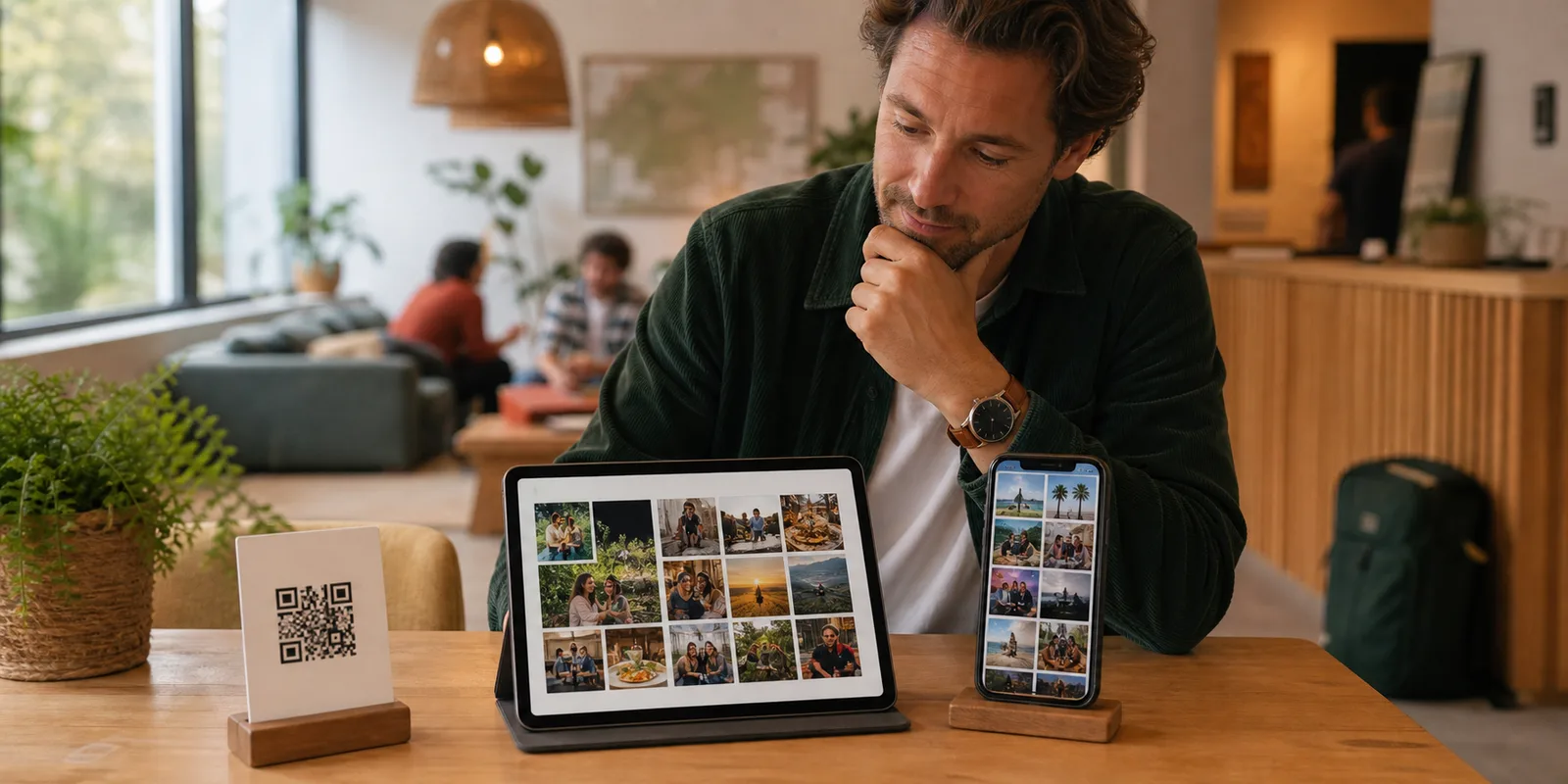
QR codes are particularly effective because they eliminate search friction. The guest does not have to find your Instagram handle, remember a hashtag, or wonder where to send the file. They scan, upload, consent, and move on in under a minute.
When you reduce the number of small decisions a guest has to make, participation rises consistently.
What kind of prompt generates the best content
If you want better guest photos, ask for better moments.
One of the most common mistakes hotels make is asking too broadly. "Share your stay" sounds reasonable but gives no guidance and produces inconsistent results.
Guests respond more reliably to narrower prompts:
- "Share your favourite rooftop moment."
- "Show us the view from your room."
- "Captured breakfast in the morning light?"
- "Upload your best sunset shot from your stay."
- "Share the moment that made this trip memorable."
Research published in the Journal of Travel Research found that experience-focused photos generate significantly higher emotional response and booking intent in people who view them, compared with facility-focused images. Asking guests to photograph experiences and emotions rather than just rooms and amenities produces content that converts better downstream.
This is where content strategy and guest experience should work together. Ask yourself:
- Which spaces are most photogenic on the property?
- Which moments best represent the brand personality?
- Which parts of the guest journey are underrepresented in your current marketing?
Then build your prompts around those answers. The best hotel UGC is not random. It is lightly guided.
The system matters more than the ask
Even a well-designed prompt will underperform if the back-end process is inconsistent.
This is where most hotel content programmes break down.
A few great photos arrive. Someone forgets to save them. Rights are unclear. Files end up scattered across direct messages, screenshots, email attachments, and shared drives. Nobody knows what has been formally approved. Three weeks later the initiative quietly stops.
That is why getting guests to share photos is only half the challenge. The other half is building a system that makes the content actually usable.
That system needs to do four things reliably:
- Collect submissions in one place.
- Capture permission clearly at the point of submission.
- Organise assets so they are searchable by space, season, or content type.
- Make publishing straightforward across social, web, email, and paid ads.
Without that infrastructure, you are not running a guest-content strategy. You are collecting occasional photos.
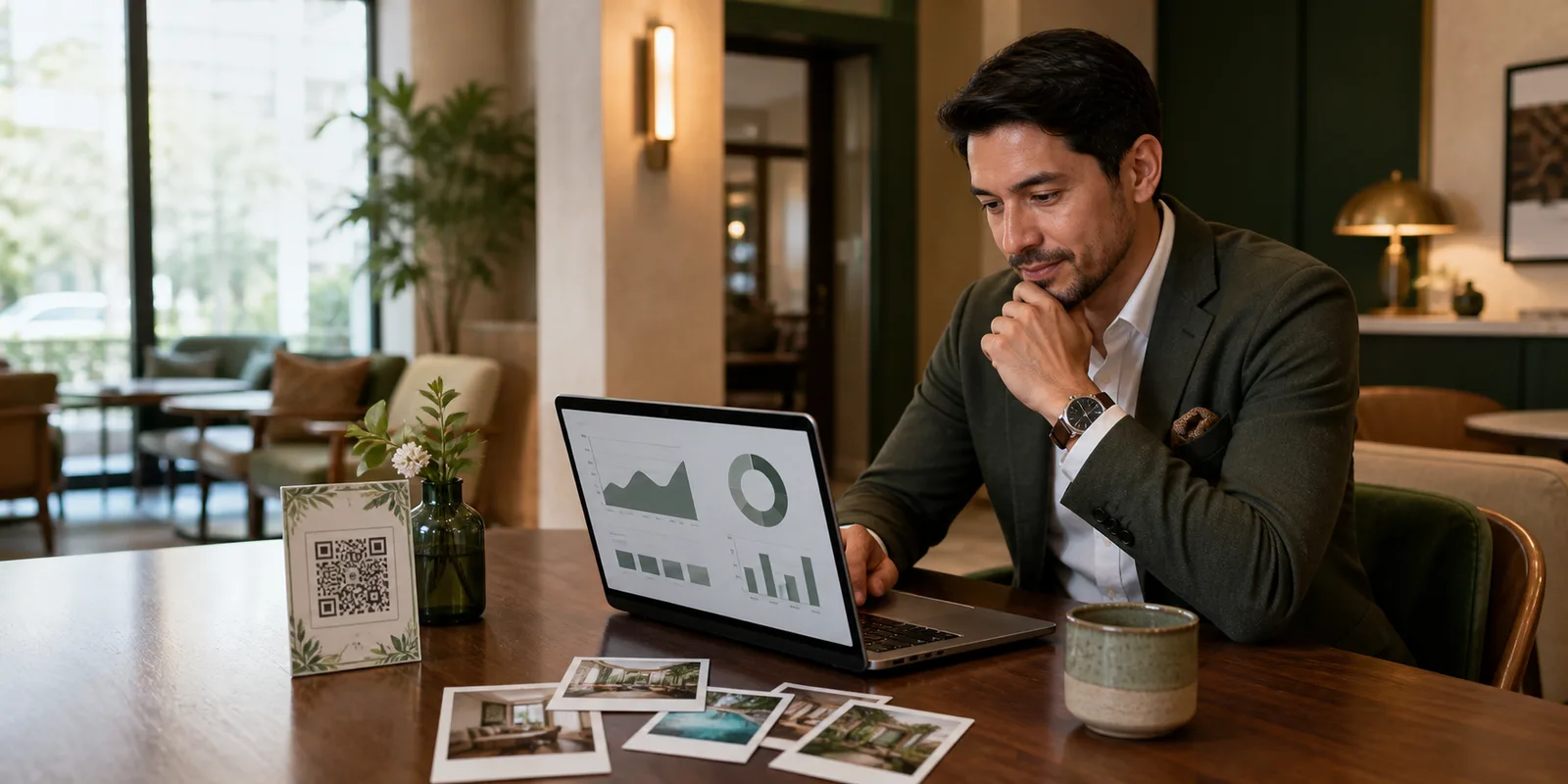
The real value of a guest UGC programme comes when it is repeatable: new images arriving each week, rights already handled, content searchable and ready to publish without anyone manually hunting through old messages.
Tools like EveryGuest are built specifically for this, combining the guest-facing capture flow with a rights-cleared content library that hospitality teams can actually use without adding work to their week. Unlike general social listening tools such as Flowbox or Stackla, which are built for broad e-commerce use cases, EveryGuest is designed around the specific moments and friction points of the hotel guest journey.
A simple five-step framework
If you want a practical starting point, here is a framework that works for properties of any size.
1. Identify your highest-photo moment
Choose the space or experience where guests already photograph most naturally. Start with one location, not ten.
2. Write one clear, specific prompt
Tell guests exactly what to share and where to send it. Keep the language warm, specific, and no more than two sentences.
3. Remove friction with a QR code
Link directly to a submission page. Do not ask guests to search, tag, or remember anything.
4. Build consent into the submission flow
Make sure rights are captured at the point of upload. This is especially important for GDPR-conscious teams operating in Europe.
5. Publish your first piece this week
Do not wait for the perfect system. Get one great piece of guest content live, then build from there. Consistency compounds.
What this looks like in practice
A boutique hotel with a rooftop terrace that catches beautiful evening light has two options.
Option one: hope guests tag the property, monitor notifications occasionally, screenshot the best content, and then hesitate to repost because rights were never explicitly granted.
Option two: place a tasteful card near the terrace entrance that reads, "Caught the sunset? Share your favourite photo from your stay here." Below it is a QR code that opens a simple upload page. Guests add their photo, accept the permission terms, and submit in under sixty seconds. In return, they receive a small discount code or a chance to be featured.
Now the hotel is no longer depending on chance. It has created a clear moment, a clear ask, a clear path, and a clear permission flow. Nothing about that feels awkward. It feels like good hospitality design.
Frequently Asked Questions
Do I need guest permission to repost a photo they tagged us in?
Yes. A tag or mention does not constitute permission to use someone's content in your own marketing. To repost, repurpose, or publish guest photos, you need an explicit rights grant from the creator. The safest approach is to build consent into the submission process rather than collecting it retroactively after a post goes live.
What is the best way to ask guests to share photos?
The most effective approach is a specific, well-timed prompt placed near your most photogenic space during the stay. Vague asks like "tag us if you post" tend to be ignored. A clear prompt such as "Captured the rooftop sunset? Share it here" with a QR code linking to a submission page consistently outperforms passive social monitoring.
Should I offer a reward for guest photo submissions?
Small, hospitality-native incentives such as a complimentary drink, a future-stay discount, or a chance to be featured can increase participation without compromising content quality. Avoid over-incentivising with large or generic prizes, which tend to attract low-effort submissions made to claim the reward rather than share a genuine moment.
What types of guest photos perform best in hotel marketing?
Experience-focused content, such as guests enjoying meals, sunsets, pool moments, or meaningful interactions, consistently outperforms facility-only photos in terms of engagement and booking intent. Prompts that ask guests to share a "moment" rather than just a "room" tend to produce more emotionally resonant and marketing-effective content.
How often should hotels be collecting guest UGC?
Ideally, UGC collection should be continuous rather than campaign-based. A well-placed QR code prompt and a simple submission flow can generate rights-cleared content every week without any active effort from the marketing team. The goal is a steady library that grows automatically with each stay.
Is UGC collection GDPR-compliant?
It can be, but the approach matters. Content collected through a structured submission flow where guests explicitly agree to usage terms is the cleanest path to GDPR compliance. Retroactively requesting rights for content scraped from social platforms is more complex and harder to document. For hotels operating in Europe, building consent into the capture flow is the recommended standard.
EveryGuest helps hotels and hospitality venues collect, rights-clear, and organise authentic guest photos through simple, high-converting sharing flows built for hospitality teams. Start your 30-day free trial